
Introduction
When planning a steel building, warehouse, stadium, or industrial workshop, one important question often comes up:
Should you use trusses or rafters?
When you’re planning and constructing a roof, there are two primary framing approaches most people rely on. Both are widely used, yet they differ in important ways and each tends to fit certain project types better than others.
If you are comparing truss vs. rafter for your next project, this guide explains the key differences in a simple way.
What Is a Rafter?
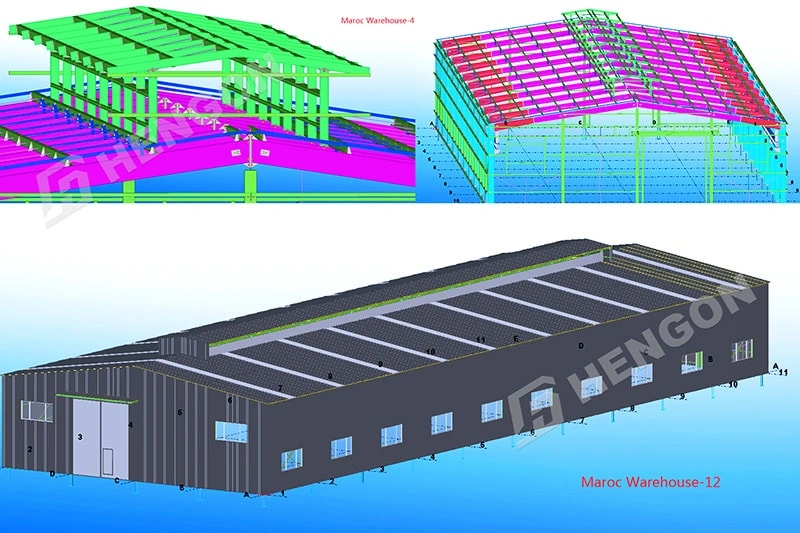
A part of a roof's framework, rafter is a classic it's the that goes from the top of the roof piece, ridge, all the way down to the wall the, to the roof.
Rafters are usually installed piece by piece on-site and are commonly used in:
Residential houses
Small commercial buildings
Simple roof systems
Rafter systems are relatively straightforward and allow more flexibility for customized roof shapes.
What Is a Roof Truss?
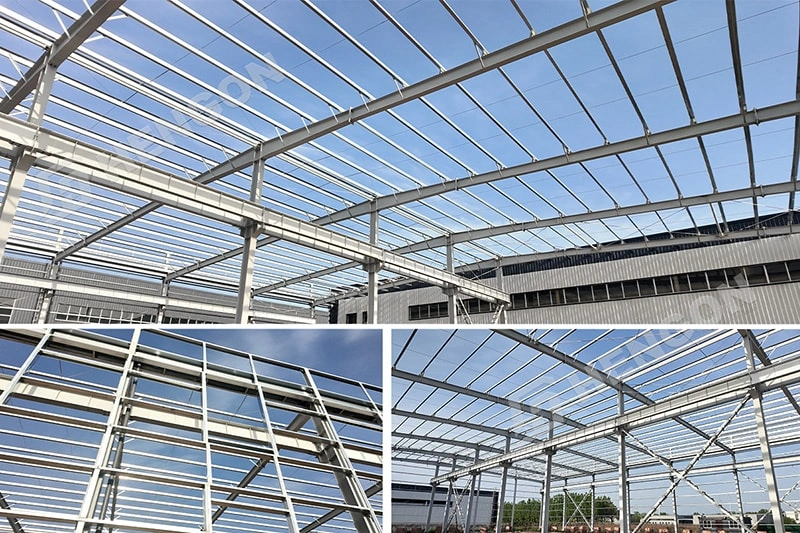
A roof truss is a prefabricated structural system made from interconnected members arranged in triangular shapes.
Unlike rafters, factories usually manufacture trusses and deliver them ready for installation.
Today, steel roof trusses are widely used in:
Warehouses
Stadium truss systems
Aircraft hangars
Industrial workshops
Large-span commercial buildings
Because trusses distribute loads efficiently, they can cover larger spans with fewer supports.
Truss vs. Rafter: Main Differences
1. Span Capability
This is one of the biggest differences.
Rafters work well for smaller buildings, but for large-span projects, trusses are usually the better option.
A properly designed steel truss structure can cover large open spaces without needing many interior columns.
This is especially important for:
Warehouses
Gymnasiums
Coal storage sheds
Space frame roof structures
If your project requires a large clear-span roof, trusses are often more practical.
2. Installation Speed
Rafters are built piece by piece on-site, which takes more labor and construction time.
Builders make trusses ahead of time, which means crews can put them up rapidly.
For international projects or projects with tight schedules, this can save significant time.
3. Structural Efficiency
Trusses use triangular geometry to transfer loads efficiently.
This allows them to handle:
Heavy roof loads
Wind pressure
Snow loads
That’s why stadium truss systems and industrial steel buildings often rely on truss structures.
4. Cost Considerations
For small projects, rafters may sometimes appear simpler.
But for larger buildings, trusses often become more cost-effective because they reduce:
Structural steel usage
Interior columns
Installation labor
Long-term maintenance
The final choice depends on the project span, roof load, and building purpose.
Steel Trusses vs. Wood Trusses
Many modern projects now use steel roof trusses instead of wood.
Why?
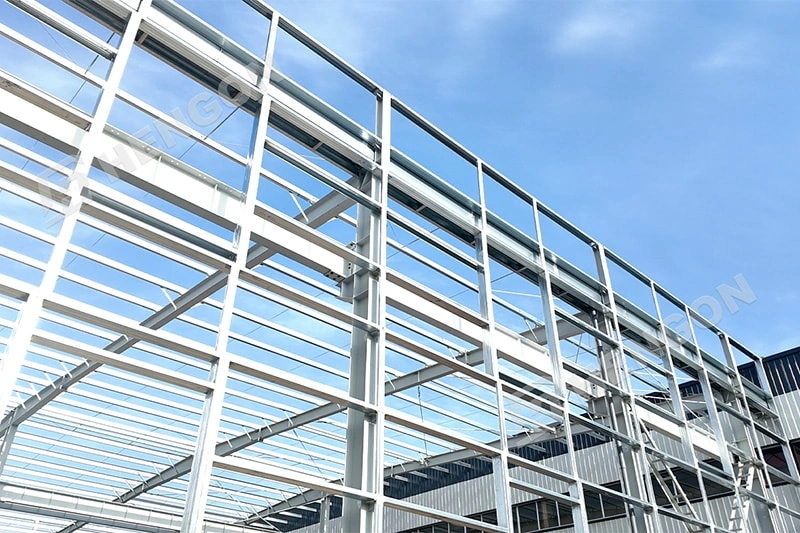
Steel trusses offer several advantages:
Higher strength
Better durability
Resistance to termites and moisture
Better fire performance
Longer service life
For industrial and commercial buildings, steel is often the preferred solution.
Common Types of Truss Structures
Different projects use different truss designs.
Some common options include:
Pratt Truss
Widely used because the diagonal members mainly carry tension, improving structural efficiency.
Howe Truss
This material can be used in some situations, but it may be more likely to buckle under compression.
Space Frame System
A more advanced structural solution used for very large-span buildings and modern architectural projects.
You can often see these systems in:
Airports
Exhibition halls
Stadium roofs
Large public buildings
When Should You Choose a Truss System?
A truss system is usually the better option when your project needs:
Large clear-span space
Faster construction
Heavy load capacity
Industrial or commercial use
Long-term durability
For projects like warehouses, factories, gymnasiums, or logistics centers, trusses are often the more efficient structural solution.
Our Steel Truss Solutions
At HENGON, we provide customized solutions for:
Steel roof trusses
Stadium truss systems
Industrial steel structures
Space frame structures
Large-span roof systems
We get the job done with smart engineering, top-notch fabrication, and smooth installation. We do this especially on projects around the world.
Conclusion
When comparing Truss vs. Rafter, there is no single answer for every project.
Rafters work well for small, simple buildings, while builders often prefer trusses for large-span steel structures and commercial projects.
The right solution depends on your building size, loading requirements, construction schedule, and long-term goals.
If you're having out which system is trouble figuring right for your project, don't worry - our engineering team is here to help. They look at your drawings and can offer some suggestions to get you on the right track.
Email: consultant7@hglsgroup.com
Phone: 0086-19398195396
Website: www.pebbuildingstructure.com
 English
 Español
 Français