
If you are planning a stadium, airport terminal, exhibition hall, warehouse, or another large-span steel building, you have probably encountered the terms space frame and space truss many times. Many customers ask the same question: what is the difference between a space frame and a space truss?
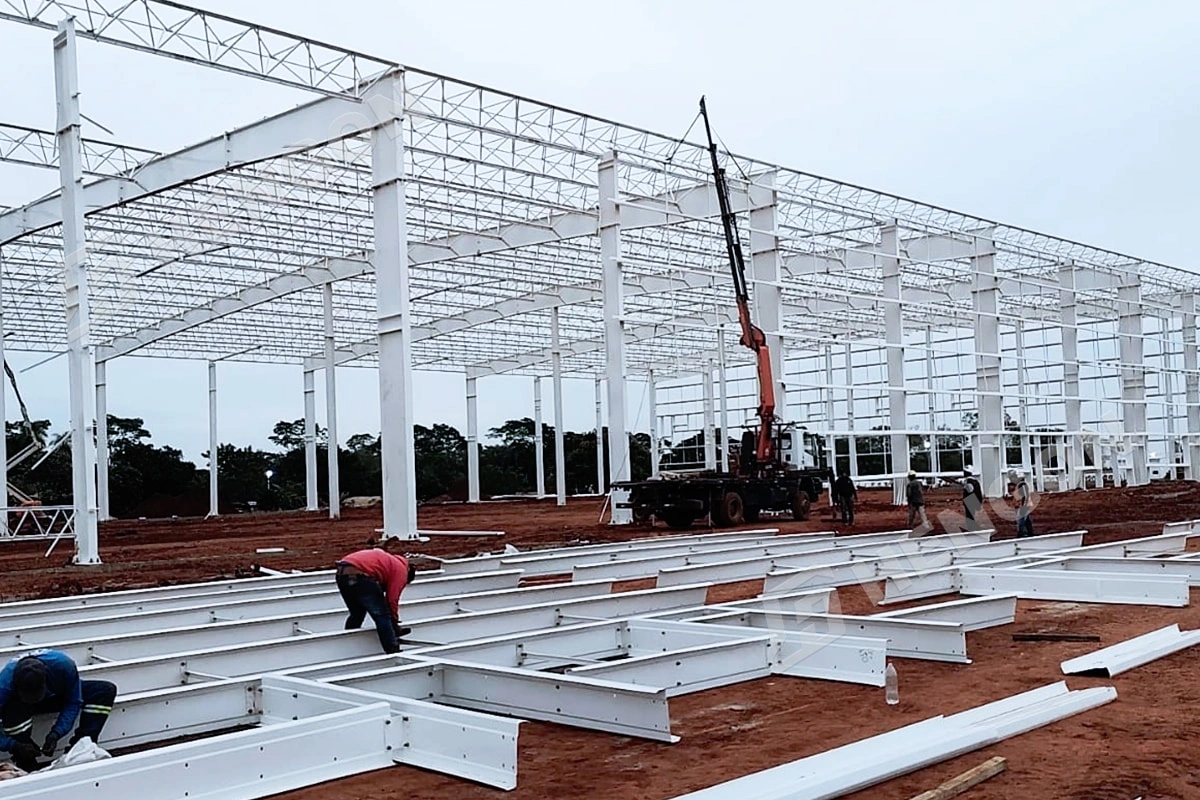
Although they may appear similar, these two structural systems work in very different ways. Understanding their differences can help you select the right structural solution for your project while avoiding unnecessary costs and design issues later.
A space frame is a three-dimensional structural system composed of interconnected steel tubes and joints. The members are rigidly connected, allowing the structure to resist bending forces, shear forces, compression, and tension simultaneously.
A space frame structure is really good at keeping its shape, which makes it very stable. This makes it perfect for big buildings that need a lot of space inside without many columns.
You can often find steel space frame systems in places like airport terminals, sports stadiums, and exhibition centers. They're also used in aircraft hangars, coal storage sheds, large warehouses, and the big open areas in shopping malls. These types of buildings need to be strong and have a lot of space inside, which is exactly what a space frame structure can provide.
One of the main advantages of a space frame roof structure is its ability to distribute loads evenly throughout the entire structural network. This allows the building to cover large open spaces while maintaining a relatively lightweight structure.
What Is a Space Truss?
A space truss is also a three-dimensional steel structure, but its connection method is different from that of a space frame.
In a space truss system, the steel members are generally hinged or pin-connected at the ends and mainly carry axial forces. Unlike a rigid space frame, the joints are not designed to resist bending moments.
A space truss is basically a regular truss system, but in 3D. It's like taking a traditional truss and adding another dimension to it. The way it works is that loads are passed through the joints, or nodes, which can make things easier in some cases. This makes it a good choice for projects that don't need to support a lot of weight.
Space Frame vs Space Truss
The simplest way to understand the difference is that a space frame is rigid, while a space truss is pin-connected. This distinction directly affects how each structure handles loads.
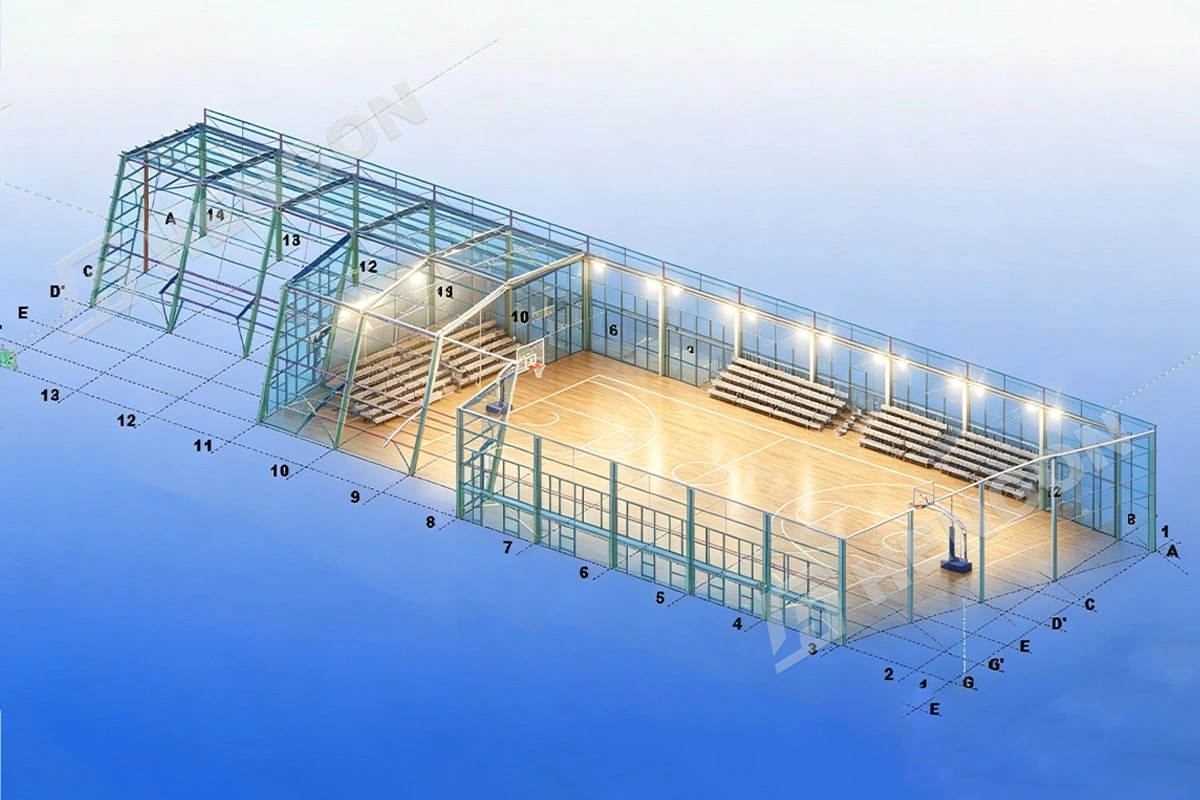
A space frame can resist bending, compression, tension, and shear forces together because of its rigid joints. A space truss mainly resists tension and compression through axial force transfer.
When it comes to projects that need to cover a lot of ground, be really strong, and withstand heavy loads, space frame systems are usually the way to go. But for smaller jobs or simpler roofs, space trusses can still be a good choice because they're cost-effective and get the job done.
Nowadays, architects and builders are more and more likely to pick space frame structures for big steel buildings that need to cover a lot of space. This is because these structures offer a lot of freedom when it comes to designing the building and make better use of the space inside.
One big plus is that you can get rid of or really cut down on the columns inside. This matters a lot for places like stadiums, airports, and gyms, where you need a lot of open space without anything getting in the way. It's also important for industrial buildings and other spots where you want a big, clear area.
One of the key advantages is how quickly it can be installed. With modern bolt ball space frame systems, the parts are made in a factory and then put together on site. This not only speeds up the building process but also makes sure everything is installed correctly.
When you compare prefabricated space frame systems to traditional heavy steel trusses, you'll find that they can also cut down on transportation and foundation costs. This is because the overall structure is lighter, which makes a big difference.
The term space frame chassis is commonly used in automotive engineering. It refers to a lightweight structural skeleton made from interconnected tubes that provide strength from multiple directions.
Although automotive space frame chassis systems differ from building space frame structures, both share the same engineering principle of distributing loads efficiently through a three-dimensional framework. This concept is what gives space frame structures their excellent strength-to-weight ratio.
Many customers researching space frames also compare different truss systems. Common steel truss types include the Pratt truss, Howe truss, Warren truss, K truss, and Fink truss.
Each truss type has unique load transfer characteristics and is selected according to span requirements, roof shape, structural performance, and project budget.
Truss calculation usually begins with determining the external loads acting on the structure, such as wind load, snow load, dead load, live load, and seismic load.
Engineers then calculate internal member forces and evaluate structural stability based on the truss geometry, support conditions, and connection methods. For long-span projects, accurate structural calculations are essential to ensure safety, durability, and long-term performance.
There is no single answer because the best choice depends on your building type, span requirements, local climate conditions, architectural goals, and project budget.
For projects that require large open spaces, long roof spans, modern architectural appearance, high structural rigidity, and fast installation, a steel space frame system is often the better solution.
For smaller buildings or simpler roofs, regular steel trusses can still be a good choice because they can save money.
Both space frame and space truss systems are widely used in modern steel construction. The key difference lies in how the members are connected and how loads are transferred throughout the structure.
If your project requires a lightweight, strong, and long-span structural solution, a space frame roof structure can help reduce columns, improve space utilization, and simplify construction.
At HENGON, we provide customized space frame structures, steel truss systems, and large-span steel building solutions for industrial, commercial, and public projects worldwide.
Looking for a reliable steel structure supplier for your next project?
Our team provides customized space frame systems, steel roof trusses, large-span steel buildings, and industrial structure solutions for global projects.
Email: consultant7@hglsgroup.com
Website: www.pebbuildingstructure.com
 English
 Español
 Français